Woven Labels vs Printed Labels: Complete Comparison Guide for Clothing Brands
Choosing between woven labels vs printed labels is one of the most critical decisions for any clothing brand. Labels are no longer just small fabric tags — they are a powerful branding element that directly influences customer perception, product value, and overall brand identity.
In today’s competitive fashion market, even the smallest details matter. A well-designed label can communicate quality, professionalism, and trust, while a poor-quality label can negatively impact how customers perceive your product. This is why selecting the right type of label is essential for both new and established clothing brands.
Whether you are launching a startup clothing brand or scaling an existing fashion label, your choice between woven and printed labels will affect durability, comfort, and branding impact. For example, brands focused on premium positioning often prefer woven labels, while comfort-driven or budget-friendly products may lean towards printed labels.
If you are just starting out and want to understand the complete landscape of garment branding, we recommend reading this complete guide to custom garment labels to build a strong foundation.
It is also important to explore other label types before making a final decision. For instance, you can compare with PVC vs silicone labels or check modern options like PU metal labels for clothing if your brand targets premium or luxury segments.
Additionally, if your focus is on durability and outdoor usage, you should also review PVC labels for clothing, while rubber labels offer a bold and rugged branding alternative.
👉 Want a complete overview of all available label options? Types of Garment Labels – Complete Guide
In this in-depth comparison guide, we will break down every important factor — including durability, comfort, cost, design flexibility, and branding impact — helping you choose the best label type for your clothing line in 2026 and beyond.
What Are Woven Labels?
Woven labels are made by weaving threads together to create text, logos, and designs directly into the fabric. Unlike printed labels, the design is not applied on top — it is built into the label itself.
This weaving process gives woven labels a premium, textured, and long-lasting finish. They are widely used by high-end fashion brands, luxury clothing labels, and premium apparel manufacturers.
👉 Explore detailed guide: Woven Labels for Clothing
Key Characteristics of Woven Labels
- Thread-based design (not printed)
- Highly durable and long-lasting
- Premium and professional appearance
- Ideal for brand logos and identity tags
- Resistant to washing and wear
Woven labels are especially effective when your brand focuses on quality, craftsmanship, and long-term customer retention.
What Are Printed Labels for Clothing? (Features, Uses & Benefits)
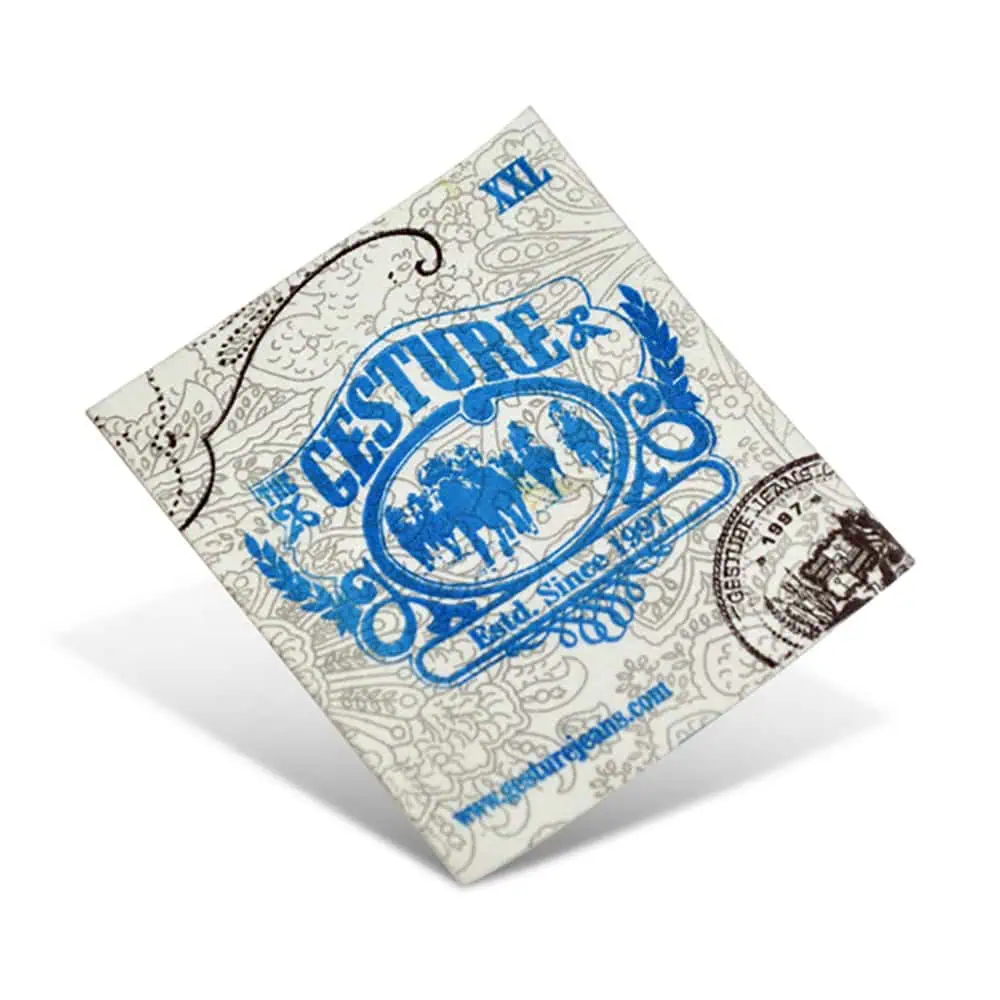
Printed labels for clothing are created by directly printing text, logos, and care instructions onto fabric using specialized inks. Unlike woven labels, where the design is stitched into the material, printed labels offer a smooth, flat surface that prioritizes comfort and flexibility.
These labels are widely used in modern apparel manufacturing, especially in segments such as casual wear, fast fashion, innerwear, and sportswear, where lightweight design and skin comfort are essential. Since there is no raised texture or stitching, printed labels are often preferred for garments that come in direct contact with the skin.
If you are comparing different label options, it is also important to understand how printed labels differ from woven labels, as well as alternatives like silicone labels or PVC labels depending on your branding and durability requirements.
👉 For a detailed breakdown, explore: Complete Guide to Printed Labels for Clothing
Key Characteristics of Printed Labels
- Ink-based printing technology – Designs are printed directly onto fabric for a clean and minimal look.
- Ultra-soft and skin-friendly – No raised threads or edges, making them ideal for sensitive skin and inner garments.
- Cost-effective for bulk production – Perfect for large-scale manufacturing and fast fashion brands.
- Best for informational tags – Commonly used for care instructions, size details, and branding inside garments.
- Lightweight and flexible – Does not add bulk or stiffness to the garment.
- Lower durability compared to woven labels – May fade over time with frequent washing.
Printed labels are an excellent choice for brands that prioritize comfort, affordability, and minimal design. However, if your goal is to create a more premium or long-lasting brand impression, you may also want to explore options like PU metal labels or PVC labels for clothing.
👉 Want to explore all available label options? Types of Garment Labels – Complete Guide
Woven Labels vs Printed Labels: Detailed Comparison
To understand which label type is better, we need to compare them across multiple factors that matter for clothing brands.
| Feature | Woven Labels | Printed Labels |
|---|---|---|
| Appearance | Premium, textured | Flat and simple |
| Durability | Very High | Medium |
| Comfort | Medium | Very Soft |
| Cost | Higher | Lower |
| Best Use | Branding | Care info |
👉 Compare with other label types: Types of Garment Labels
Durability: Which Label Lasts Longer?
Durability is one of the most critical factors when choosing between woven and printed labels. Woven labels are designed to last as long as the garment itself because the design is woven into the fabric.
On the other hand, printed labels may fade over time due to washing, friction, and exposure to heat.
👉 Also read: Benefits of PVC Labels
If your brand focuses on long-lasting premium products, woven labels are the clear winner.
Comfort & Skin Feel
Comfort plays a major role in customer satisfaction. Printed labels are extremely soft because they are flat and lightweight, making them ideal for inner neck labels.
Woven labels, while slightly thicker, can be made soft using high-quality threads and finishing techniques.
👉 Explore soft label options: Silicone Labels Guide
Branding Impact: Which Looks More Premium?
If your goal is to build a strong brand identity, woven labels are far superior. Their textured finish and detailed weaving create a high-end look that customers associate with premium quality.
Printed labels, while functional, do not offer the same visual impact.
👉 Premium branding options: PU Metal Labels
Cost Comparison: Budget vs Value
Printed labels are more affordable, making them suitable for mass production and budget clothing lines.
Woven labels require more advanced manufacturing, which increases cost — but also increases perceived value.
👉 Learn cost strategies: Label Costing Guide
Best Use Cases for Woven Labels
- Luxury fashion brands
- Streetwear brands
- Premium clothing collections
- Long-lasting garments
- Brand-focused products
👉 Branding tips: Why Labels Matter
Best Use Cases for Printed Labels in Clothing (Where They Work Best)
Printed labels for clothing are best suited for applications where comfort, flexibility, and cost-efficiency are the top priorities. Due to their soft, flat finish and lightweight nature, they are widely used in garments that require direct skin contact and minimal bulk.
These labels are especially popular among brands that focus on high-volume production, fast fashion, and everyday wear. Unlike woven or rubber-based labels, printed labels ensure a smooth wearing experience without irritation.
- Inner neck labels – Perfect for tagless branding that improves comfort and eliminates itching.
- Care instruction labels – Ideal for printing washing instructions, size details, and fabric composition directly onto garments.
- Budget clothing lines – Cost-effective solution for brands targeting price-sensitive markets.
- Lightweight garments – Best suited for t-shirts, activewear, and summer clothing where minimal weight is important.
- Kidswear and innerwear – Soft and skin-friendly, making them safe for sensitive skin and daily wear.
While printed labels excel in comfort and affordability, they may not be the best choice for premium branding or long-term durability. In such cases, brands often consider alternatives like woven labels for durability, PU metal labels for luxury appeal, or PVC labels for rugged and outdoor applications.
👉 Want to compare all label types before deciding? Complete Guide to Types of Garment Labels
In summary, printed labels are the ideal choice when your focus is on comfort, simplicity, and cost efficiency, especially for high-volume and everyday clothing products.
When Should You Use Both?
Smart clothing brands use both woven and printed labels together.
- Woven label → branding
- Printed label → care info
👉 Full strategy: How to Choose Labels
Common Mistakes to Avoid
- Choosing labels only based on cost
- Ignoring brand positioning
- Using low-quality materials
- Overcomplicating designs
- Wrong placement
Future Trends in Garment Labels
Modern fashion is evolving rapidly, and labels are becoming more than just identifiers. Brands are now using labels as a storytelling tool — integrating QR codes, premium textures, and unique materials.
👉 Future trends: Future of Labels
How to Choose the Right Label for Your Brand
Choosing between woven labels vs printed labels depends on your brand positioning, target audience, and product type.
- Go for woven labels if you want premium branding
- Choose printed labels for comfort and cost efficiency
- Use both for a balanced approach
👉 Expert guide: Complete Label Guide
FAQs
Which is better: woven or printed labels?
Woven labels are better for branding and durability, while printed labels are better for comfort and cost.
Do printed labels fade?
Yes, printed labels can fade over time depending on quality and washing conditions.
Are woven labels expensive?
They are slightly more expensive but offer better long-term value.
Can I use both types?
Yes, combining both is the best strategy used by top brands.
Which is best for premium brands?
Woven labels are the best choice for premium clothing brands.
Conclusion
Both woven labels and printed labels have their own advantages. The right choice depends on your brand goals, budget, and product category.
If you want to build a strong and premium brand identity, woven labels are the best option. If your focus is comfort and cost-efficiency, printed labels work well.
👉 Final recommendation: Talk to Label Expert